
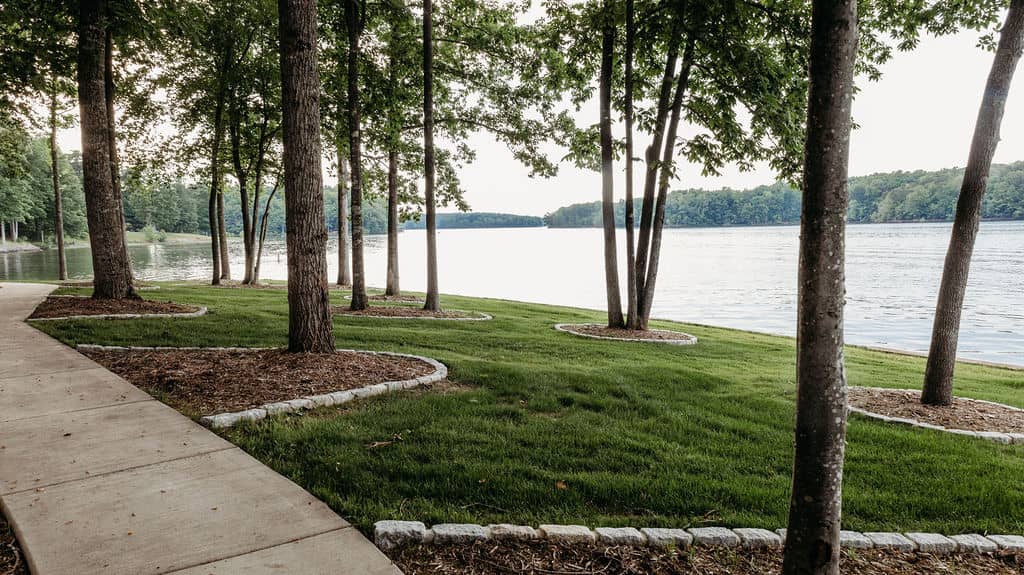
Many lawn, landscape, and shoreline problems don’t start at the surface — they start with water. Poor grading and drainage can quietly cause standing water, thinning grass, erosion, and even shoreline damage. Before sod, seed, or hardscapes can succeed, the land itself needs to work the way it’s supposed to.
Below are the most common questions homeowners ask us about grading and drainage — and why getting this step right makes everything else last longer.
What is final grading?
Final grading is the process of shaping and smoothing the land so water drains properly away from structures, hardscapes, and shorelines. It’s typically done after construction or major earthwork and before installing sod, seed, or landscaping. Proper grading creates gentle slopes that guide water where it should go — not where it causes problems.
How do I know if I have drainage issues?
Common signs of drainage problems include standing water after rain, soggy or muddy areas, thinning grass, erosion channels, or water pooling near foundations or walkways. If parts of your yard never seem to dry out, drainage is likely the issue — not the lawn itself.
Can grading fix standing water?
Yes, in many cases. Standing water is often caused by low spots or improper slope. Final grading corrects these issues by reshaping the land so water flows naturally away instead of collecting. In more complex cases, grading may be paired with drains or swales for best results.
Can grading help prevent erosion?
Absolutely. Proper grading slows and redirects water flow, reducing the force that causes soil to wash away. This is especially important on sloped properties and lakefront homes, where uncontrolled runoff can accelerate erosion.
Is grading necessary before installing sod or seed?
Yes — and skipping it is one of the most common mistakes we see. Sod and seed rely on even soil contact and proper drainage to establish roots. Without correct grading, new lawns often fail, wash out, or develop thin spots no matter how much fertilizer is applied.
Can grading protect my shoreline?
Yes. Grading plays a critical role in shoreline protection by managing runoff before it reaches the water’s edge. By directing water away from the shoreline and stabilizing slopes, grading helps reduce erosion and works hand-in-hand with riprap, seawalls, and other shoreline solutions.