
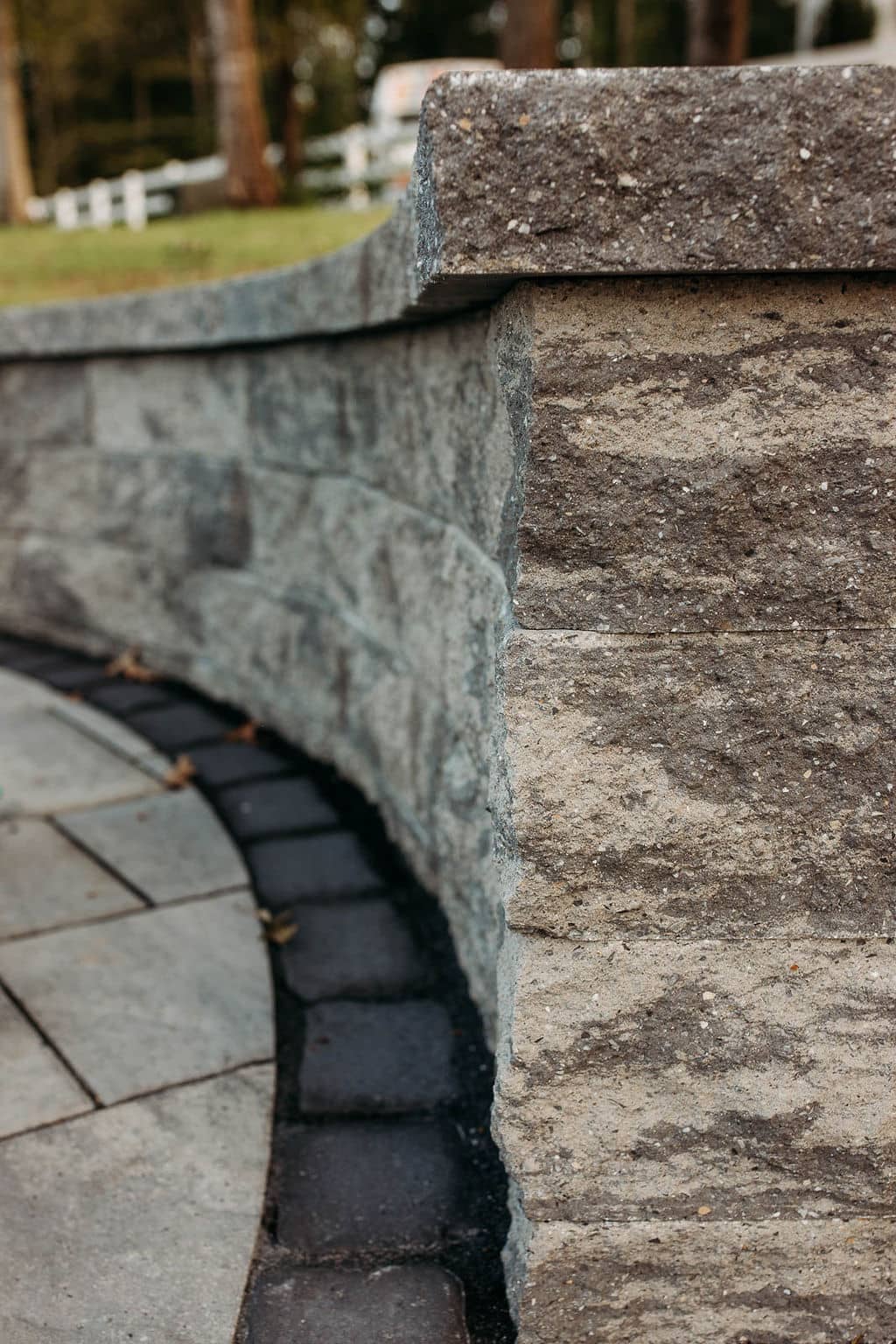
Hardscaping is often what turns a yard from “nice” into usable. Patios, walkways, fire pits, retaining walls, and steps create the structure that allows you to actually enjoy your outdoor space — especially at the lake. But not all hardscapes are created equal, and lakefront properties require extra planning for drainage, erosion, and long-term durability.
Below are the most common hardscaping questions homeowners ask us — answered clearly so you can make confident decisions.
What is hardscaping?
Hardscaping refers to the permanent, non-living elements of your landscape. This includes patios, walkways, fire pits, retaining walls, steps, seating walls, and other stone or concrete features that provide structure and function to your yard.
What’s the difference between hardscape and landscape?
Landscape (or softscape) includes living elements like grass, plants, trees, and mulch. Hardscape includes structural elements made from stone, pavers, or concrete. The best outdoor spaces use both — hardscape creates the framework, and landscape softens and enhances it.
How long do patios and hardscapes last?
When built correctly, hardscapes can last 20–40 years or more. Longevity depends on proper base preparation, drainage, material quality, and professional installation. Poorly built patios often fail early due to settling, cracking, or water issues.
Pavers vs stamped concrete — which is better?
Pavers are individual units that flex slightly with the ground, making them more resistant to cracking and easier to repair. Stamped concrete is a single slab that can crack over time and is harder to fix. While stamped concrete often costs less upfront, pavers usually offer better long-term value and durability — especially near the lake.
Which hardscape materials are best for lakefront properties?
Pavers, natural stone, and properly engineered block systems perform best at Lake Anna. These materials handle moisture, temperature changes, and soil movement better than poured concrete or untreated materials.
Can you build fire pits and patios near the shoreline?
Yes — with proper planning. Lakefront hardscapes must account for slope, drainage, and shoreline protection. When designed correctly, patios and fire pits can be safely integrated with riprap, seawalls, or other shoreline solutions.
Do hardscapes require permits?
Some hardscape projects do require permits, especially near the shoreline or when grading is involved. Permit requirements vary by county and project type. We identify permit needs early and handle the process when required.
How do hardscapes affect drainage and erosion?
Hardscapes can either reduce or worsen erosion depending on how they’re built. Proper grading and drainage direct water away from structures and shorelines. Poorly planned hardscapes can increase runoff and erosion. That’s why base prep and drainage design are critical.
Can hardscapes increase property value?
Yes. Well-designed hardscapes add usable living space, improve curb appeal, and make properties more attractive to buyers. Lakefront patios, walkways, and fire pits are often seen as premium features.
Can hardscapes be integrated with lawn care and maintenance?
Absolutely. Many homeowners combine hardscape projects with ongoing lawn and landscape maintenance to keep everything looking polished. Integrating services ensures the entire property works together — structurally and visually.