
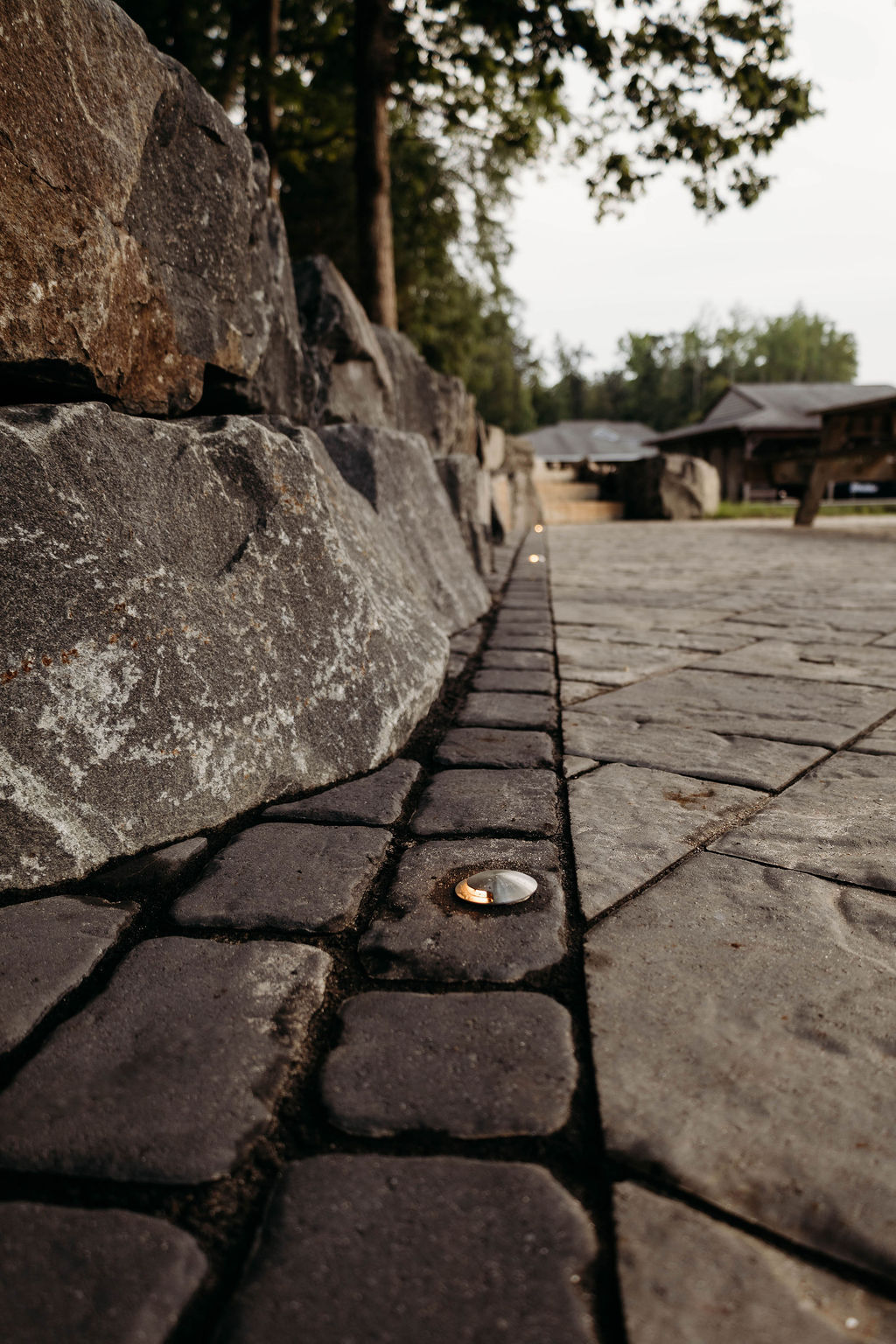
When you imagine your dream outdoor space — a cozy fire pit overlooking the lake, a smooth walkway leading to your dock, or a patio perfect for weekend gatherings — one decision sits at the heart of it all: what’s beneath your feet.
At Local Landscapers, we know that every beautiful outdoor space starts with a strong foundation. When it comes to patios, two options dominate the conversation — pavers and stamped concrete. Both can deliver beautiful results, but they differ greatly in performance, maintenance, and long-term value.
Let’s break down what sets them apart, so you can make an informed, confident choice for your property.
1. Aesthetics & Design Flexibility
Paver Patios
Pavers are the custom suit of outdoor design. Available in a wide variety of shapes, colors, and patterns, they can create everything from a modern courtyard look to a timeless cobblestone feel. Because pavers are installed piece by piece, they allow for creative layouts and intricate designs that reflect your personal style.
At Local Landscapers, we use only high-quality, fade-resistant pavers built to handle the Lake Anna sun and seasonal shifts. The result is a clean, refined look that elevates your home’s curb appeal and blends seamlessly with your shoreline or landscape.
Stamped Concrete Patios
Stamped concrete offers a more uniform look — poured concrete that’s pressed with patterns to mimic stone, slate, or brick. When freshly done, it looks polished and cohesive, but the surface can fade or lose texture over time. While the upfront cost may be lower, you’re limited to preset stamp designs and colors that can’t easily be altered once installed.
If creative freedom and a timeless finish matter most, pavers win. If you prefer a single, seamless surface and lower upfront cost, stamped concrete may suffice.
2. Durability & Weather Resistance
Paver Patios
Pavers are known for their long-term strength. Because they’re made from dense concrete or stone and installed over an open-graded base, they’re designed to handle the region’s freeze-thaw cycles without cracking. If the ground shifts slightly, individual pavers move with it — maintaining structural integrity and preventing large cracks.
Stamped Concrete Patios
Concrete, no matter how well-installed, is a solid slab. Over time, weather changes, temperature swings, and natural settling can lead to cracking. Even hairline fractures can worsen with moisture and freezing. Repairs are often noticeable, requiring resurfacing or patching.
For Lake Anna’s variable climate, pavers provide superior flexibility and resilience.
3. Maintenance & Repairs
Paver Patios
Maintaining pavers is surprisingly easy. Routine sweeping and an occasional rinse are usually enough to keep them looking clean. Sealing is optional, not mandatory. If a paver becomes stained or damaged, it can be replaced individually — no need to disturb the entire surface.
Stamped Concrete Patios
Stamped concrete requires more upkeep. To protect against fading, cracking, and staining, the surface must be sealed every two to three years. Once the sealant wears, moisture can seep in, causing deterioration. Repairs are more complicated, since you can’t replace a single “stone.” Matching texture and color across poured sections can be difficult.
Pavers offer easier, more affordable maintenance over time.
4. Cost & Long-Term Value
Paver Patios
Yes, the upfront investment is higher — but that cost reflects quality materials, drainage preparation, and professional installation. The payoff is long-term durability, easy repairs, and higher resale value. Pavers often outlast stamped concrete by decades when properly maintained.
Stamped Concrete Patios
Stamped concrete tends to be cheaper at first glance. However, ongoing sealing, repair costs, and the likelihood of visible wear can offset that initial savings. Over ten years, pavers typically provide better ROI.
Stamped concrete wins for short-term savings; pavers win for long-term value.
5. Installation Quality & Craftsmanship
At Local Landscapers, we take pride in doing the job right — from the ground up. Our patios are installed over a compacted, open-graded base to promote proper drainage and prevent settling. We edge with precision concrete borders, use premium polymeric sand, and level everything to withstand time and traffic.
Stamped concrete relies more heavily on the quality of the pour and finish. Even minor inconsistencies during installation can lead to uneven texture, cracks, or drainage issues.
When craftsmanship matters, pavers — installed properly — deliver results you can trust.
The Bottom Line: What’s Best for You?
If you want a low-maintenance, high-value, and long-lasting solution that elevates your property and complements your lake lifestyle, pavers are the clear winner.
But if you’re looking for a quick, budget-friendly refresh and don’t mind a bit of upkeep, stamped concrete can still offer a polished look.
Either way, the most important factor is installation quality — and that’s where we come in.
At Local Landscapers, we believe your outdoor spaces should be built with honesty, craftsmanship, and care. Whether you’re comparing pavers to stamped concrete or exploring ways to enhance your property, our team is here to guide you every step of the way.
Built Like a Dream. Backed by a Handshake.
Ready to start your Love Your Lawn Project? Call Local Landscapers today to schedule your consultation and see why more Lake Anna homeowners are choosing patios built to last — and made to love.