
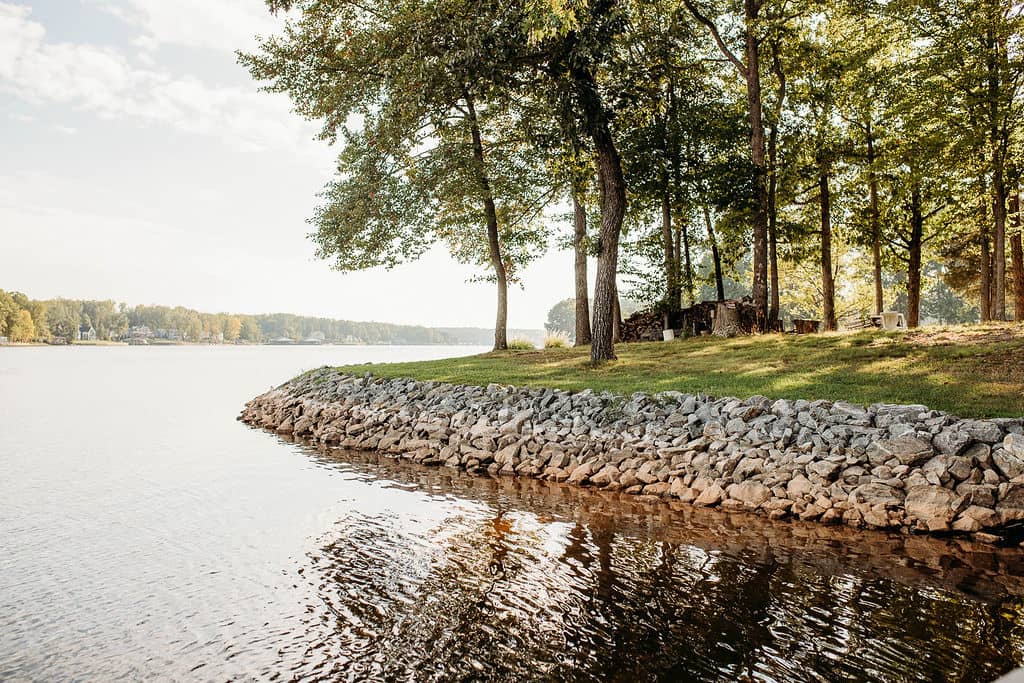
Shoreline erosion is one of the most common — and costly — issues facing Lake Anna homeowners. It often starts quietly, but left unaddressed, it can damage property, reduce usable yard space, and impact the lake itself.
This guide answers the most common questions we hear about shoreline erosion and protection. Whether you’re just starting to notice changes or actively planning a solution, understanding your options is the first step toward protecting your investment and preserving the lake you love.
What causes shoreline erosion at Lake Anna?
Shoreline erosion at Lake Anna is caused by a combination of constant wave action, boat wakes, fluctuating water levels, and naturally soft soils common in this region. Over time, these forces break down the soil structure along the water’s edge, slowly pulling land into the lake. Poor grading and unmanaged runoff from yards can accelerate the process.
How do I know if my shoreline is eroding?
Early signs of erosion include exposed roots, undercut banks, leaning trees, or soil washing into the water after storms. More advanced erosion may show up as collapsing edges, failing walls, or a noticeable loss of yard space near the shoreline. If your shoreline looks steeper or narrower than it used to, erosion is likely already underway.
What is riprap and how does it work?
Riprap is a shoreline protection method that uses large, angular stone installed over heavy-duty geotextile fabric. The stone absorbs wave energy instead of allowing it to hit bare soil. This prevents erosion, stabilizes the shoreline, and allows water to move naturally without washing soil away.
How long does riprap last?
When properly installed, riprap can last 30 to 50 years or more. Longevity depends on correct stone size, proper base preparation, fabric installation, and drainage. Riprap that is rushed or improperly installed often fails much sooner.
Will riprap shift or need maintenance?
Some minor settling can occur over time, especially after heavy storms — this is normal. Properly installed riprap rarely requires major repairs. Periodic inspections and small adjustments can extend its lifespan significantly. Major shifting is usually a sign of improper installation, not the material itself.
What’s the difference between riprap and a seawall?
Riprap uses stone to absorb and disperse wave energy along a sloped shoreline, while a seawall creates a vertical barrier that holds soil back. Riprap is more natural-looking and flexible, while seawalls are structural and best for steep or high-impact shorelines. Each has its place depending on site conditions.
What’s the difference between block walls and boulder walls?
Block walls are engineered, stacked systems designed for strength and precision, often used where space is limited. Boulder walls use large natural stones for a more organic appearance and are often paired with riprap. Both offer structural support, but the best choice depends on slope, exposure, and aesthetic goals.
Which shoreline solution is best for my property?
There is no one-size-fits-all answer. The best solution depends on your shoreline’s slope, wave exposure, soil conditions, access, and how you want to use the space. During a consultation, we evaluate these factors and recommend a solution that balances durability, appearance, and long-term performance.
Is shoreline protection environmentally friendly?
Yes — when done correctly. Proper shoreline protection prevents sediment and phosphorus from entering the lake, which helps maintain water clarity and aquatic health. Riprap and natural stabilization methods work with the lake’s natural processes instead of against them.
Does shoreline work help protect the lake?
Absolutely. Stabilized shorelines reduce erosion, limit runoff, and prevent excess sediment from clouding the water. Shoreline protection isn’t just good for your property — it benefits the entire lake ecosystem.
Can shoreline erosion affect my property value?
Yes. Erosion can reduce usable yard space, threaten structures, and create visible damage that lowers curb appeal. Buyers often see eroding shorelines as a red flag. Proper shoreline protection preserves property value and makes your home more attractive long-term.
Can shoreline protection be combined with landscaping or patios?
Yes — and it often should be. Many homeowners pair shoreline protection with patios, fire pits, walkways, or landscape design. Building these elements together ensures proper grading, drainage, and seamless transitions from yard to water.