
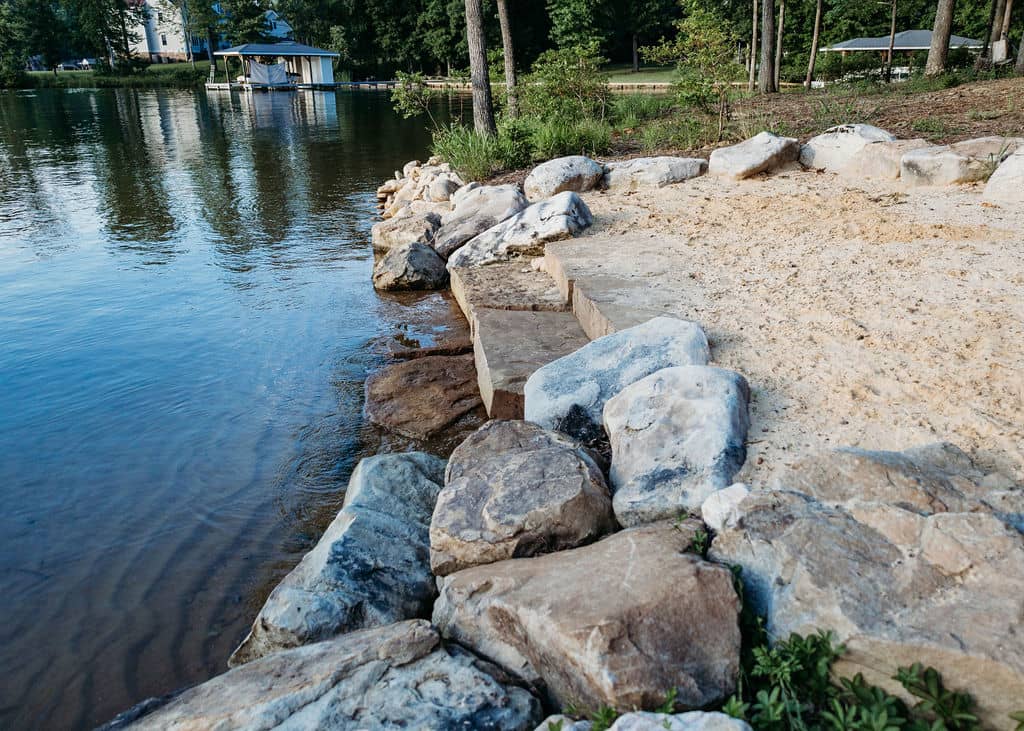
Shoreline work isn’t just about stone, walls, and water — it’s about doing things the right way. At Lake Anna, shoreline protection is regulated to protect both homeowners and the lake itself. Permit requirements can feel confusing or frustrating, but understanding the process upfront can save you time, money, and major headaches later.
Below are the most common questions homeowners ask us about shoreline permits, timelines, and regulations — answered clearly and honestly.
Do I need a permit for shoreline work?
In most cases, yes. Shoreline projects such as riprap installation, seawalls, block walls, and other erosion-control measures typically require permits. The exact requirements depend on your property’s location, shoreline type, and the scope of work, but most lakefront projects cannot be completed legally without approval.
Who handles the permitting process?
We do. At Local Landscapers, we manage the entire permitting process for shoreline projects. This includes preparing documentation, submitting applications, and coordinating with the appropriate agencies so homeowners don’t have to navigate the process themselves.
How long do shoreline permits take?
Timelines vary by county and project complexity. In Louisa County, permits are often processed in a matter of weeks. In Spotsylvania County, the process can take several months depending on review requirements. During your consultation, we’ll outline a realistic timeline based on your specific property.
Why are permits more expensive in Spotsylvania County?
Spotsylvania County has more extensive review requirements and higher associated fees, which can add several thousand dollars to a shoreline project. These costs are set by the county and are outside of a contractor’s control. While it can feel frustrating, the goal is to ensure shoreline work is environmentally sound and structurally safe.
What happens if work is done without a permit?
Unpermitted shoreline work can lead to stop-work orders, fines, or required removal of installed materials. In some cases, homeowners are required to restore the shoreline to its original condition — which can cost significantly more than doing the work properly from the start.
Can unpermitted shoreline work cause problems later?
Yes. Unpermitted work can create issues when selling a property, refinancing, or filing insurance claims. Buyers and inspectors may flag unauthorized shoreline structures, leading to delays or forced remediation before a sale can close.
Do you handle county and DEQ coordination?
Yes. When required, we coordinate with county offices, environmental agencies, and the Department of Environmental Quality (DEQ). Our goal is to ensure your shoreline project is compliant, approved, and built above board — protecting both your property and your peace of mind.